Wood Duck
Aix sponsa
Family Anatidae
Quick answer
A strikingly patterned duck of wooded swamps and quiet ponds, and one of the few North American ducks that nests in tree cavities.
Quick facts
- Size
- Medium duck, roughly 47–54 cm
- Habitat
- Wooded swamps, beaver ponds, quiet creeks, marshes with overhanging trees
- Range
- Eastern North America and the Pacific coast; partially migratory
- Diet
- Acorns, seeds, aquatic plants, insects
- When to look
- Year-round in the south; summer breeder further north
- Family
- Anatidae
Identification
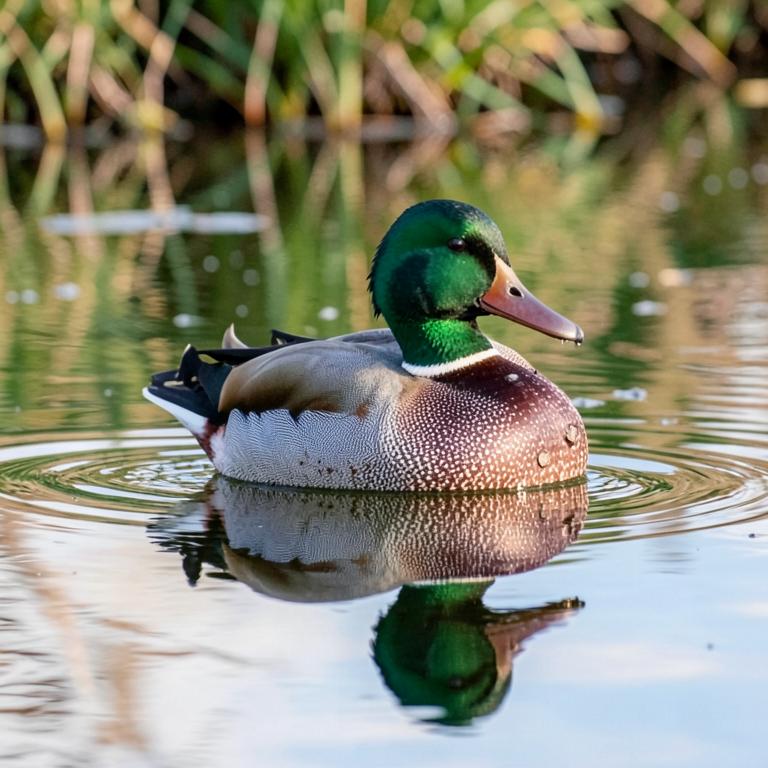
- Male: iridescent green swept-back crest, white facial striping, chestnut breast, red eye
- Female: grey-brown with a distinctive white teardrop eye ring and small crest
- Boxy head shape and long squared tail
- Flies fast through trees with the head held high
Behaviour
Nests in tree cavities and nest boxes, sometimes far from water; ducklings jump from the nest hole within a day of hatching. Usually shy, flushing with a rising squealing whistle.
Similar species
- Mandarin Duck
- Escaped ornamental in some areas; orange 'sail' feathers on the back.
- Hooded Merganser
- Shares wooded ponds but has a thin bill and a fan-shaped white crest.
Birding tips
- Approach quiet water slowly and scan the far bank under overhanging branches
- Nest boxes on wooded ponds are very effective and easy to monitor
Frequently asked questions
Do Wood Ducks really nest in trees?
Yes, in natural cavities and nest boxes, sometimes over ten metres up.
Why are they hard to photograph?
They flush early and favour shaded water. Patience from a fixed position works far better than walking the bank.
Have you seen this bird?
Record the sighting and it joins your life list.
Species information here is written by us. Your sightings, photos and notes stay yours, in your own journal.
More birds