Blue Jay
Cyanocitta cristata
Family Corvidae
Quick answer
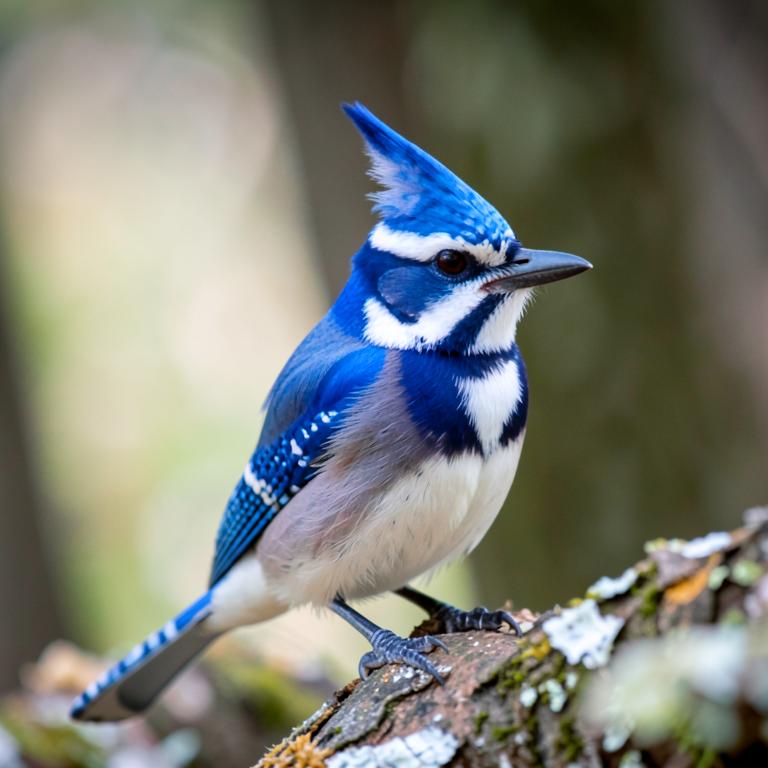
A large, crested, blue-and-white corvid of eastern North American woodlands and suburbs — loud, intelligent, and far more subtle in behaviour than its reputation suggests.
Quick facts
- Size
- Larger than a robin, roughly 25–30 cm long
- Habitat
- Oak and mixed woodland, parks, suburbs with mature trees
- Range
- Eastern and central North America; some populations move south in autumn
- Diet
- Acorns, nuts, seeds, insects; caches large numbers of acorns each autumn
- When to look
- Year-round in most of its range, with visible daytime migration along ridges and coasts in autumn
- Family
- Corvidae
Identification
- Bright blue upperparts with black barring and white wing patches
- Whitish underparts and a black 'necklace' across the chest
- Tall blue crest, lowered when relaxed
- Long, white-cornered tail
Behaviour
Highly vocal and an accomplished mimic — a convincing Red-shouldered Hawk imitation is a common trick. Jays cache thousands of acorns each autumn and are considered significant dispersers of oaks.
Similar species
- Steller's Jay
- Western; blackish head and much deeper blue, no white in the wing.
- Florida Scrub-Jay
- Crestless, plainer blue, restricted to Florida scrub.
Birding tips
- Follow a screaming jay — they mob owls and hawks, and often reveal a roosting raptor
- Autumn ridges are the place to see loose flocks moving in daylight
Frequently asked questions
Why do Blue Jays imitate hawks?
Probably to test whether a hawk is present, and possibly to clear other birds from a feeder. Both explanations have support.
Are Blue Jays aggressive?
They are bold and noisy, but studies of feeder behaviour find they displace other birds less often than their reputation suggests.
Have you seen this bird?
Record the sighting and it joins your life list.
Species information here is written by us. Your sightings, photos and notes stay yours, in your own journal.
More birds