Bald Eagle
Haliaeetus leucocephalus
Family Accipitridae
Quick answer
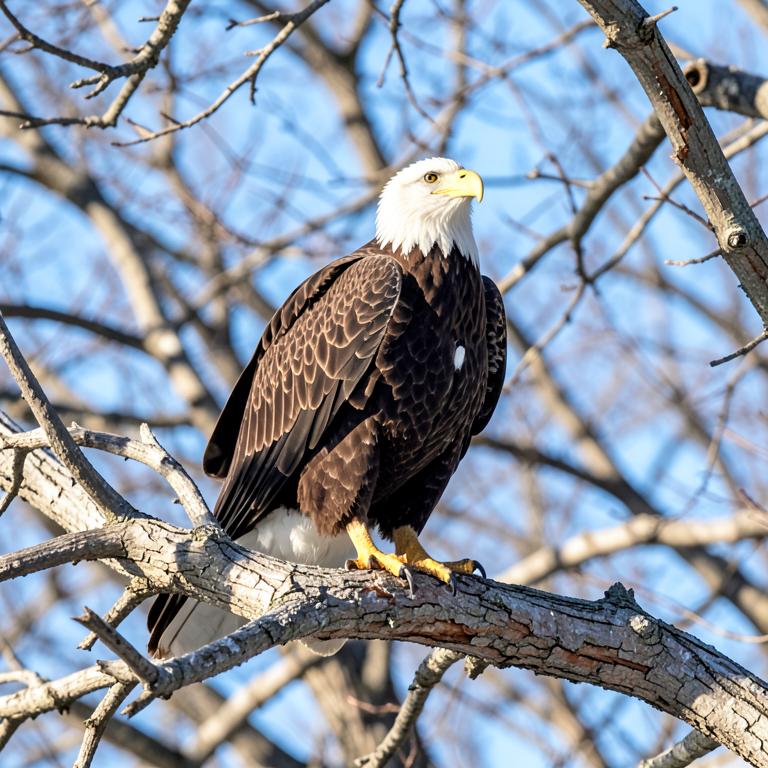
A very large fish eagle of North American coasts, lakes and large rivers. Adults are unmistakable; immatures are dark and mottled, and are regularly misidentified.
Quick facts
- Size
- Very large; wingspan roughly 1.8–2.3 m
- Habitat
- Coasts, large lakes, rivers and reservoirs, usually with tall perch trees
- Range
- Across North America, from Alaska and Canada to northern Mexico
- Diet
- Mainly fish; also waterfowl, carrion and scavenged food
- When to look
- Year-round in much of the range; northern birds move south to open water in winter
- Family
- Accipitridae
Identification
- Adult: white head and tail, dark brown body, heavy yellow bill
- Immature: dark brown with variable white mottling, dark bill — takes four to five years to reach adult plumage
- Flies on flat, plank-like wings, unlike the shallow V of a vulture
- Very large head and bill projection in flight
Behaviour
Often perches motionless for long periods on a prominent branch over water. Regularly pirates fish from Ospreys, and gathers in numbers at winter fish concentrations.
Similar species
- Golden Eagle
- Smaller head, feathered legs, immature shows clean white wing patches and tail base.
- Osprey
- Much smaller, white below with a dark eye stripe and crooked wings.
- Turkey Vulture
- Holds wings in a V and rocks in flight; tiny head.
Birding tips
- Scan the tallest dead trees along a shoreline first
- Winter below dams and at open water is reliable in northern states
- Note bill colour and body mottling before calling an immature bird
Frequently asked questions
How long until a Bald Eagle gets its white head?
Around four to five years, passing through several mottled immature plumages.
Are Bald Eagles common now?
They recovered strongly after the banning of DDT and legal protection, and are widespread again across much of North America.
Have you seen this bird?
Record the sighting and it joins your life list.
Species information here is written by us. Your sightings, photos and notes stay yours, in your own journal.
More birds