Roseate Spoonbill
Platalea ajaja
Family Threskiornithidae
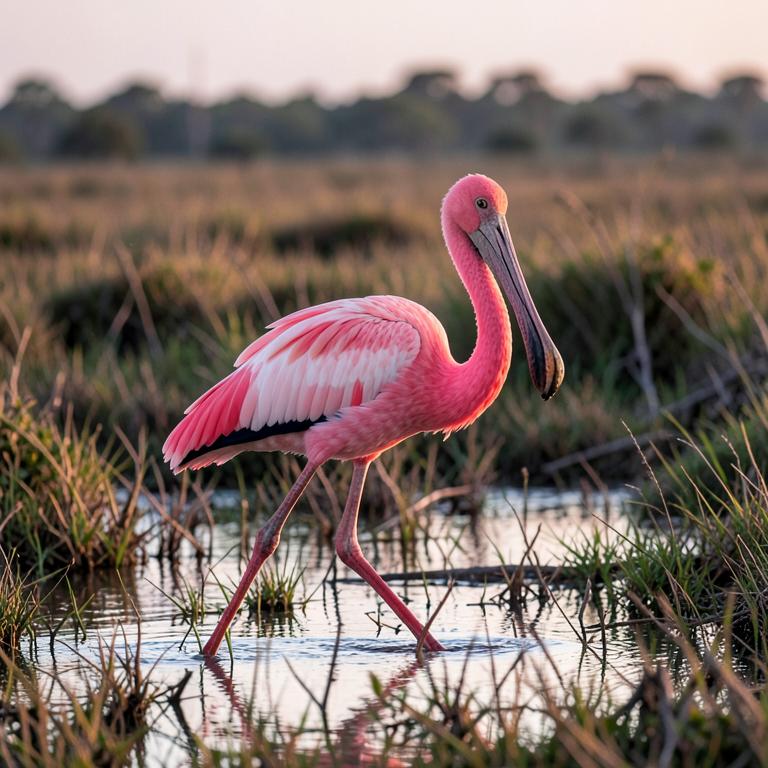
Quick answer
An unmistakable pink wading bird of southern coastal wetlands, sweeping its spatulate bill side to side through shallow water.
Quick facts
- Size
- Large; roughly 70–85 cm tall, wingspan around 1.3 m
- Habitat
- Mangroves, coastal lagoons, shallow brackish and freshwater marsh
- Range
- Gulf coast and Florida, through Central and South America
- Diet
- Small fish, shrimp, crustaceans and aquatic insects, located by touch
- When to look
- Year-round in the far south; wanders north after breeding in late summer
- Family
- Threskiornithidae
Identification
- Pink body with deeper carmine on the wings and shoulders
- Long grey spatulate bill
- Bare greenish head in adults
- Flies with neck extended, unlike herons
Behaviour
Feeds by sweeping the open bill through water and snapping it shut on contact, often in small groups working the same shallow flat. Nests colonially with herons, egrets and ibises.
Similar species
- American Flamingo
- Far taller, with a sharply kinked bill and a much longer neck.
- White Ibis
- White with a decurved red bill; often feeds alongside spoonbills.
Birding tips
- Rising tide pushes fish into shallow margins and often brings spoonbills close
- Expose for the pink — spoonbills clip highlights easily in bright coastal light
Frequently asked questions
Why are spoonbills pink?
Pigments from the crustaceans in their diet, the same mechanism that colours flamingos.
Is it a flamingo?
No, it is a spoonbill, in the ibis family. The spatulate bill is diagnostic.
Have you seen this bird?
Record the sighting and it joins your life list.
Species information here is written by us. Your sightings, photos and notes stay yours, in your own journal.
More birds