Red-shouldered Hawk
Buteo lineatus
Family Accipitridae
Quick answer
A medium-sized woodland buteo of wet forests and suburbs, more often heard than seen — its ringing 'kee-yah' call carries a long way through the trees.
Quick facts
- Size
- Medium buteo, wingspan roughly 90–110 cm
- Habitat
- Bottomland and riparian woodland, wooded suburbs, swamp edges
- Range
- Eastern North America and coastal California; largely resident
- Diet
- Small mammals, amphibians, reptiles, large insects, occasionally birds
- When to look
- Year-round in most of its range
- Family
- Accipitridae
Identification
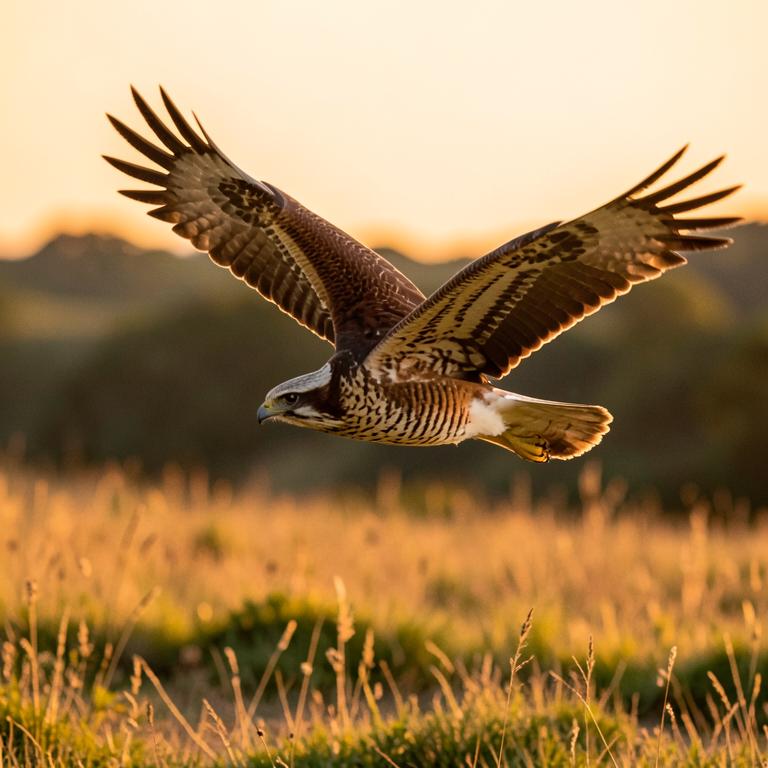
- Rufous barred underparts and rusty shoulder patch
- Boldly black-and-white banded tail
- Translucent pale crescents near the wingtips, visible when backlit in flight
- Slimmer and longer-tailed than a Red-tailed Hawk
Behaviour
Hunts from perches at mid-height inside woodland rather than soaring over open country. Extremely vocal in late winter and spring, when pairs call repeatedly over their territory.
Similar species
- Red-tailed Hawk
- Bulkier, brick-red tail, pale chest with a dark belly band.
- Broad-winged Hawk
- Smaller and chunkier, with a broadly banded tail and no rusty shoulder.
- Cooper's Hawk
- Accipiter shape — short rounded wings, long tail, flap-flap-glide flight.
Birding tips
- Learn the call — it is the most reliable way to find this species, though Blue Jays imitate it well
- Check wooded creek corridors in suburbs; they often nest closer to houses than expected
Frequently asked questions
How do I separate it from a Red-tailed Hawk?
Look for the banded black-and-white tail, rufous barred underparts and the pale wingtip crescents in flight.
Why does the hawk I hear turn out to be a jay?
Blue Jays imitate this call convincingly and frequently.
Have you seen this bird?
Record the sighting and it joins your life list.
Species information here is written by us. Your sightings, photos and notes stay yours, in your own journal.
More birds